What Is Fusion Splicing?
Fusion splicing is the process of permanently joining two optical fibers by precisely aligning the glass cores and melting them together with a controlled electric arc. The result is a single continuous strand of glass — the light travels straight through with almost no loss.
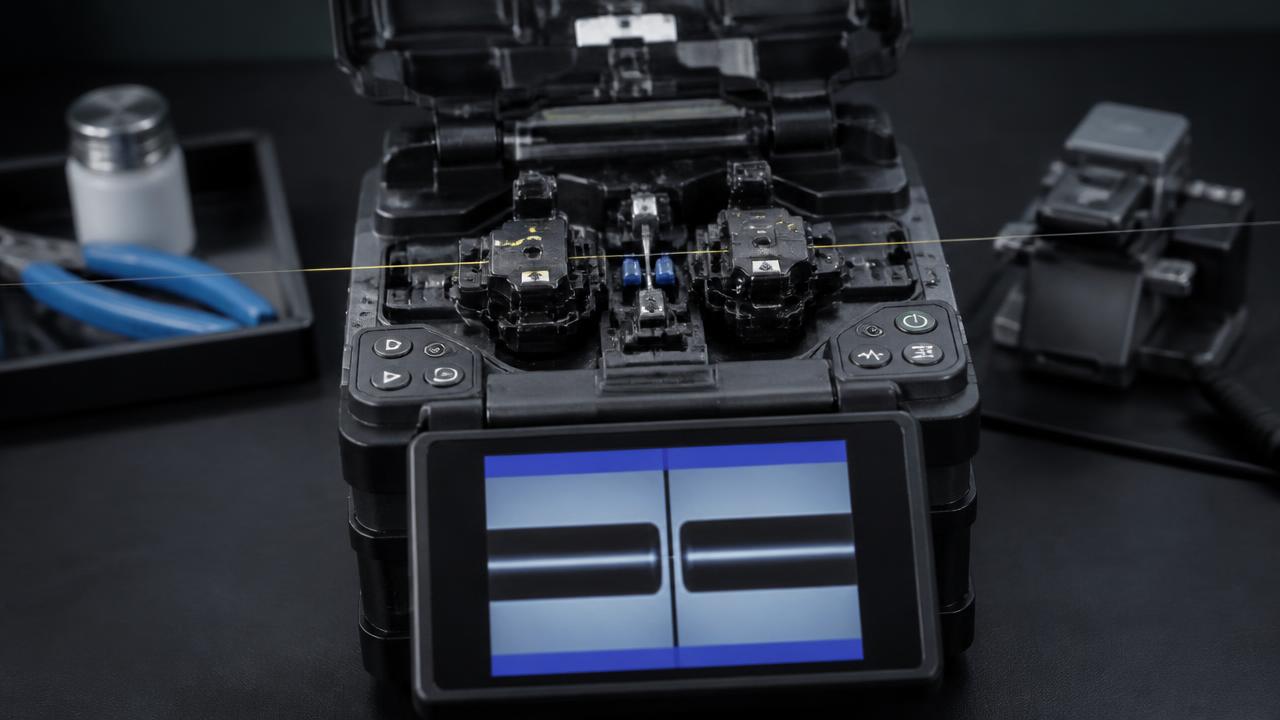
Fiber is spliced anywhere a continuous run isn't possible — at handholes, vaults, aerial enclosures, splitter cabinets, network huts, and customer-side terminations. Splicing is what stitches a network together.
Quick · Temporary
Two fibers are clamped together inside a small alignment sleeve with index-matching gel. Fast for emergency repairs, but typically introduces 0.1–0.5 dB of loss and degrades over time.
Permanent · Industry Standard
Cores are fused with an electric arc into a single strand. Typical loss is 0.01–0.05 dB and the splice lasts the lifetime of the cable. This is what nearly every modern build uses.
Why is fusion splicing the industry standard over mechanical splicing?